
What Is Composite Veneer?
Composite veneer is made from real wood but engineered for consistency, durability, and cost-effectiveness. It replicates the look of solid wood while offering greater affordability, available in a wide variety of grains, colors, and styles.
How It’s Made
- Raw Material — Produced from fast-growing species like poplar or ayous, chosen for their light color and ease of processing.
- Veneer Production & Dyeing — Logs are peeled into thin sheets, then dyed in water-based baths. This replicates premium wood tones and unlocks colors natural wood can’t — gray, black, whitewashed. Sheets are dried and sorted by tone for uniformity.
- Block Assembly — Dyed sheets are glued into large stacks with grain running the same direction, then pressed under heat and pressure into a stable billet.
- Re-Slicing — The cured block is sliced across the stack, creating engineered grain patterns — straight, rift, or exotic looks.
Why It Matters for Specification
Because every sheet comes from the same engineered block, grain and color stay consistent from the first panel to the last — something natural veneer can’t guarantee. It also makes efficient use of raw material, offering a responsible option that still delivers real wood’s warmth.
Where to Use It
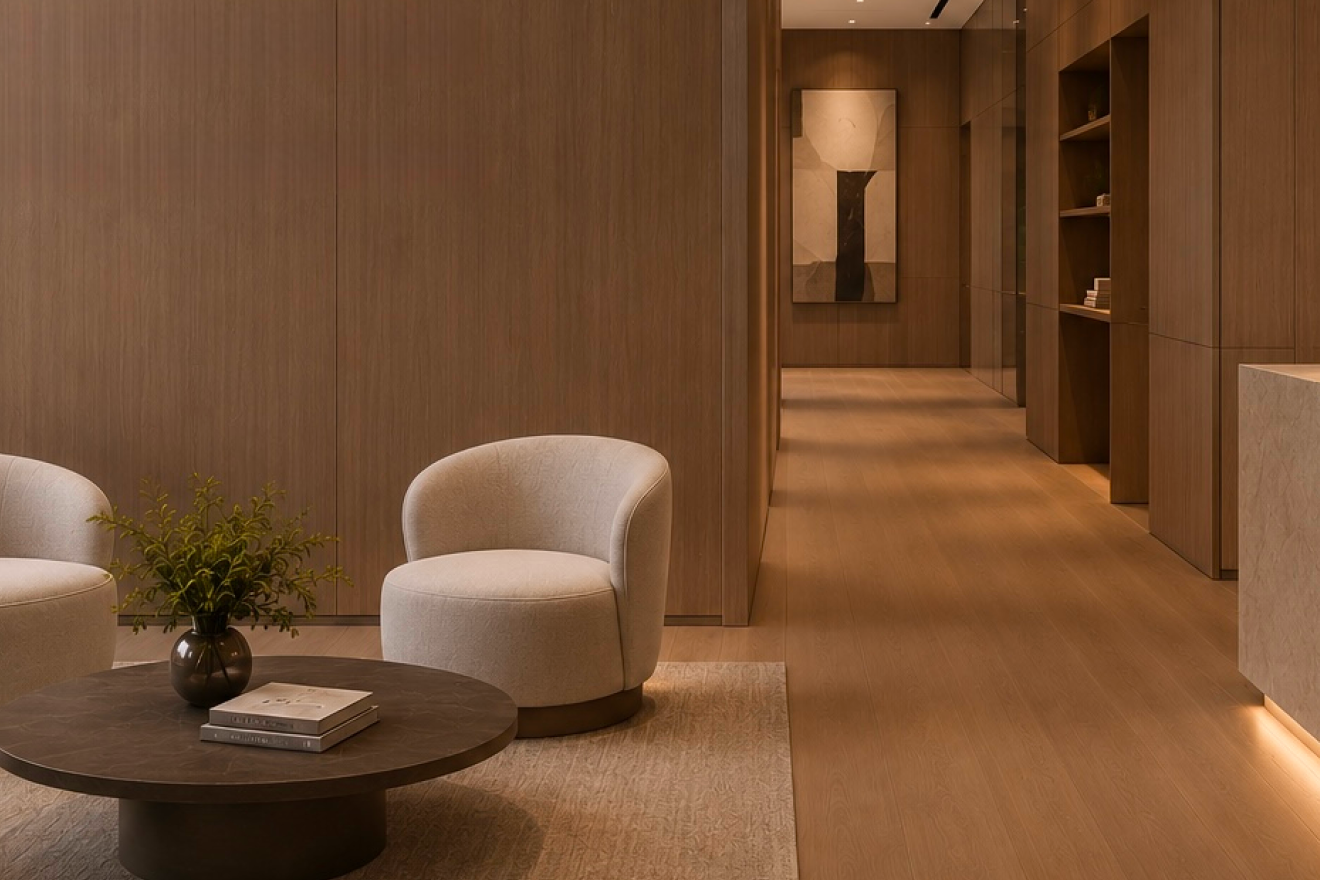
Ideal for projects where continuity across large surfaces matters — feature walls, cabinetry runs, hospitality interiors, and commercial millwork.
At Plywood Express, our composite veneer collections — including Composite Alpi | Brookside, Composite Star, and Composite Tabu — are fully customizable to match your project’s species, tone, and size.
Explore our composite veneer collections