
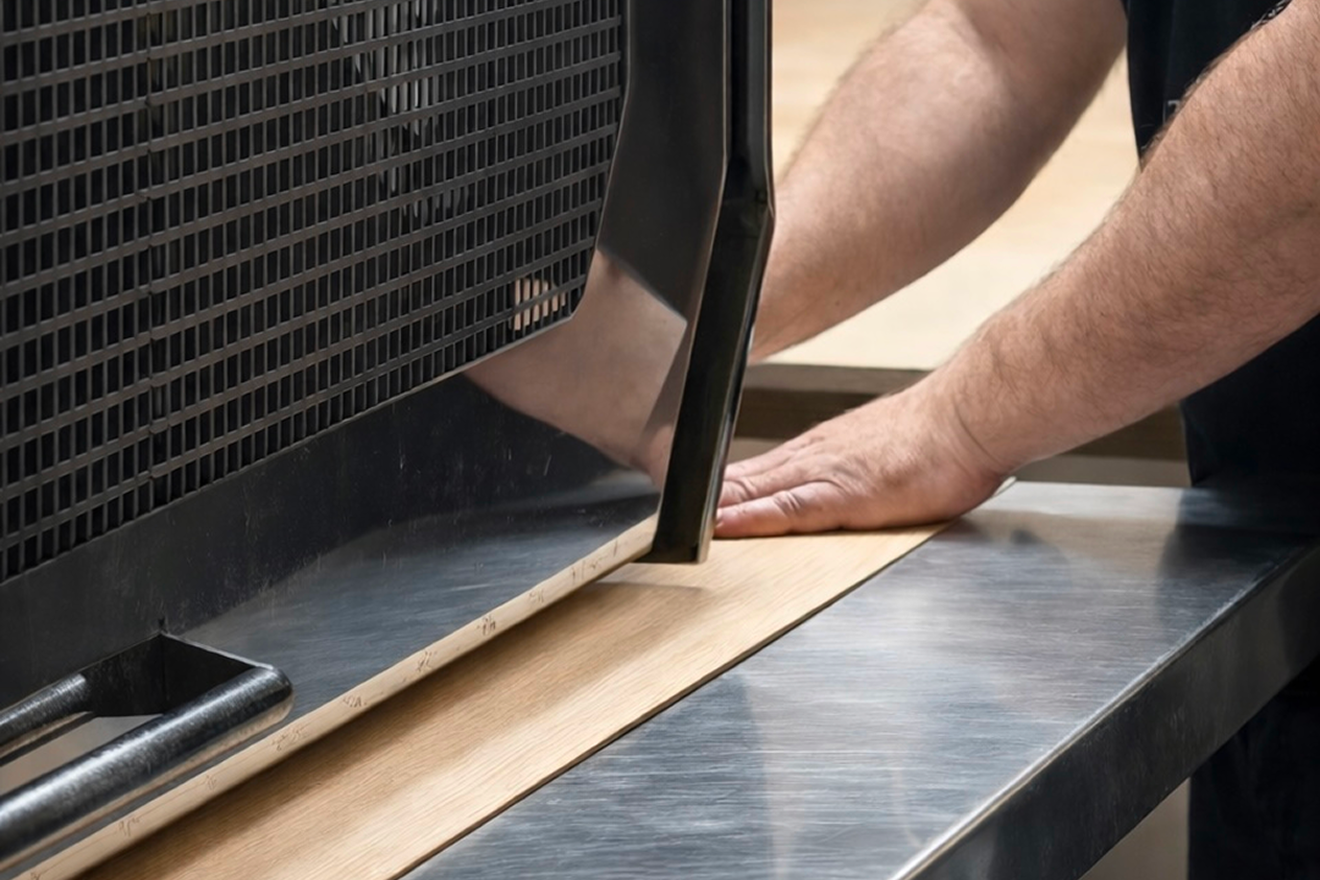
A single veneer leaf only goes so far. For walls, cabinetry, or millwork that need to run wide and long without a visible break, that’s where veneer splicing comes in.
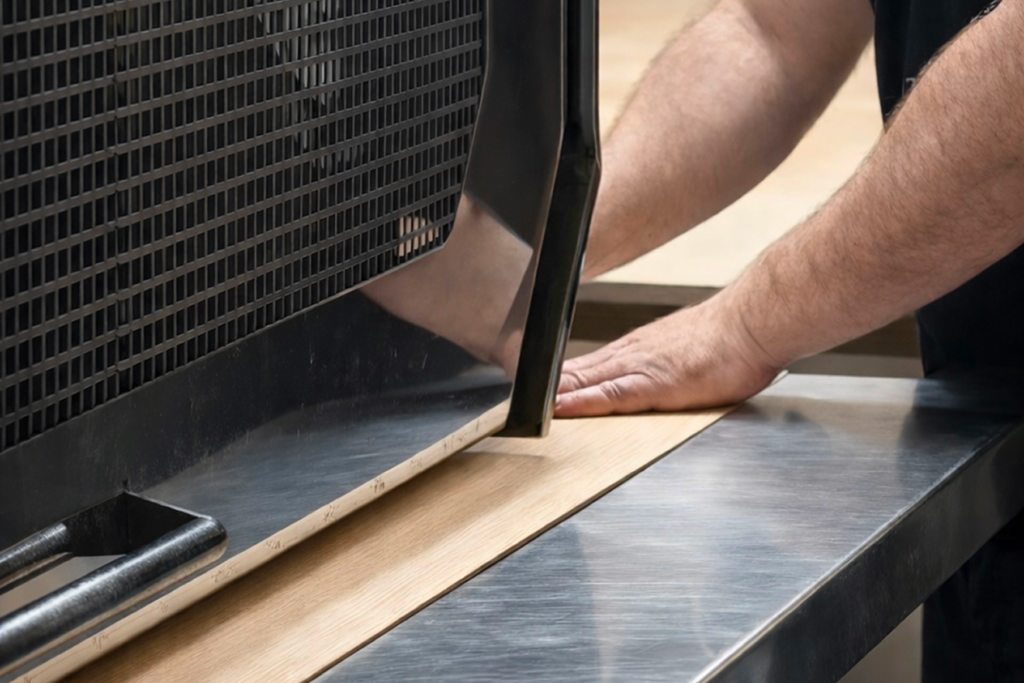
What Veneer Splicing Is
Veneer splicing is the process of joining individual veneer flitches to create larger, continuous panels. It gives far more flexibility in size, layout, and design — making it possible to achieve seamless surfaces across wide applications like cabinetry, wall panels, and architectural millwork.
Through precise alignment and advanced bonding methods, splicing keeps grain direction, color, and pattern consistent from edge to edge.
What’s Included in the Service
- Veneer selection — choosing species, color, and grain
- Matching layout — assembling veneers into the desired pattern
- Splicing and jointing — precisely cutting and joining sheets into a seamless face
- Trimming and grading — ensuring uniform dimensions and visual quality
- Quality control & taping — each face is taped and inspected for color consistency, grain alignment, and surface quality
Why It Matters
Beyond the visual result, veneer splicing improves material efficiency — maximizing the use of every veneer leaf rather than discarding what doesn’t fit a single panel size. The result is a refined, high-quality finish that balances craftsmanship with design flexibility.
Specification
Available with any veneer species, in sizes up to 5×12 FT. At Plywood Express, we create and supply veneer faces to a customer’s exact design, species, size, and matching requirements.
Have a project that needs a continuous wood surface? Reach out to discuss species, size, and matching options.