
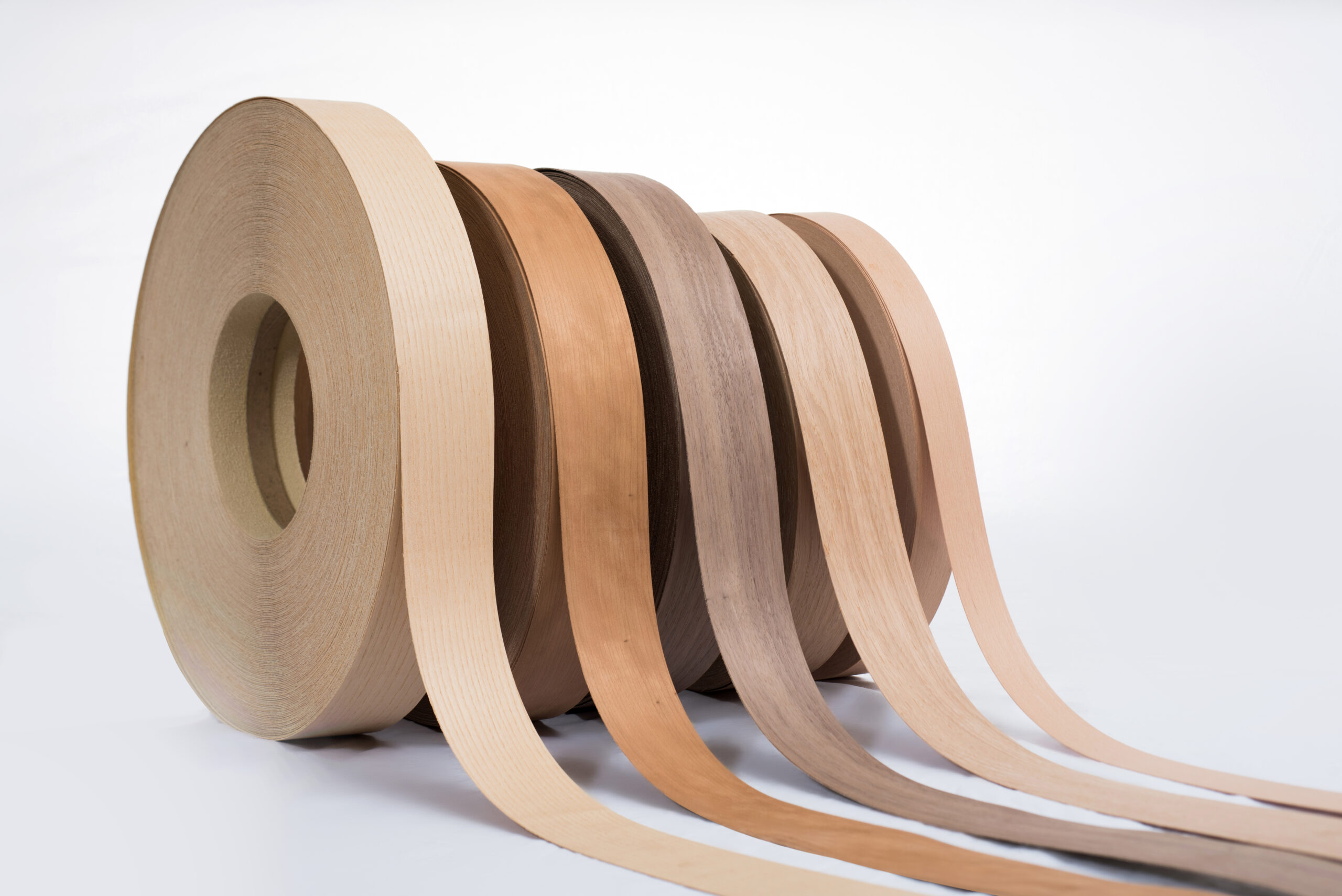
If you’ve ever looked closely at a cabinet, shelving unit, desk, or piece of modern furniture, chances are you’ve already seen edge banding, even if you didn’t realize it at the time.
Edge banding is one of the most important finishing details in woodworking and cabinetry because it helps transform raw panel edges into clean, durable, and professional-looking surfaces.
What Is Edge Banding?
Edge banding, sometimes referred to as edgebanding, is both a product and a manufacturing process. It involves applying thin strips of material to the exposed edges of plywood, MDF, particleboard, or other panel products.
These exposed edges would otherwise reveal the unfinished core material beneath the decorative surface. Edge banding covers those raw edges to create a cleaner, more refined appearance while also helping protect the panel from moisture, impacts, and everyday wear.
When properly applied, edge banding creates the appearance of a solid, seamless panel, making it an essential component in modern cabinetry and architectural millwork.
Where Is Edge Banding Used?
Edge banding is used in a wide variety of woodworking and interior design applications. It is commonly found on cabinet doors, shelving, closets, office furniture, reception desks, entertainment centers, countertops, wall panels, and commercial fixtures.
Virtually any panel product with an exposed edge can benefit from edge banding, especially in projects where aesthetics, durability, and long-term performance are important.
Why Is Edge Banding Important?
Beyond appearance, edge banding serves several practical purposes. Raw panel edges can be rough, porous, and vulnerable to damage over time. Applying edge banding helps protect those edges from chipping, moisture intrusion, and daily wear while also improving safety by eliminating sharp or abrasive surfaces.
From a design perspective, edge banding creates a much cleaner and more professional finish. Matching edge banding can seamlessly blend with wood veneer panels, decorative laminates, or textured surfaces to create a consistent and cohesive appearance throughout the project.
In many cases, the quality of the edge finish is one of the details that separates high-end cabinetry and millwork from lower-quality construction.
How Is Edge Banding Applied?
Edge banding can be applied manually or through automated machinery depending on the size and complexity of the project.
In smaller workshops or DIY applications, edge banding may be applied by hand using adhesives, clamps, irons, or heat-activated glue systems. Larger manufacturers and professional cabinet shops typically use automated edge banding machines that apply the material quickly and precisely for a more consistent finish.
Modern commercial edge banding products often include pre-applied hot-melt adhesives that simplify installation while improving bonding performance.
Because many edge banding materials are thin and flexible, they can also be used on curved surfaces, rounded corners, and custom-shaped components that would be difficult to finish with solid wood edging.
Types of Edge Banding Materials
Edge banding is available in several different materials depending on the desired appearance, durability requirements, and application.
Wood veneer edge banding is commonly used to match real wood veneer plywood and architectural panels. Decorative laminate edge banding is frequently paired with HPL surfaces and commercial cabinetry. Other popular materials include PVC, ABS, acrylic, and melamine, each offering different performance characteristics, flexibility, and finish options.
The right material depends on the project’s design goals, durability requirements, and budget.
The Finishing Detail That Makes a Difference
While edge banding may seem like a small detail, it plays a major role in the final appearance, durability, and quality of cabinetry and millwork projects. A properly finished edge helps create a polished, seamless look while improving long-term performance.
At Plywood Express, we offer a wide range of edge banding solutions, decorative panels, and architectural wood products for residential and commercial applications. Contact our team to learn more about available materials, finishes, and matching options for your next project.