
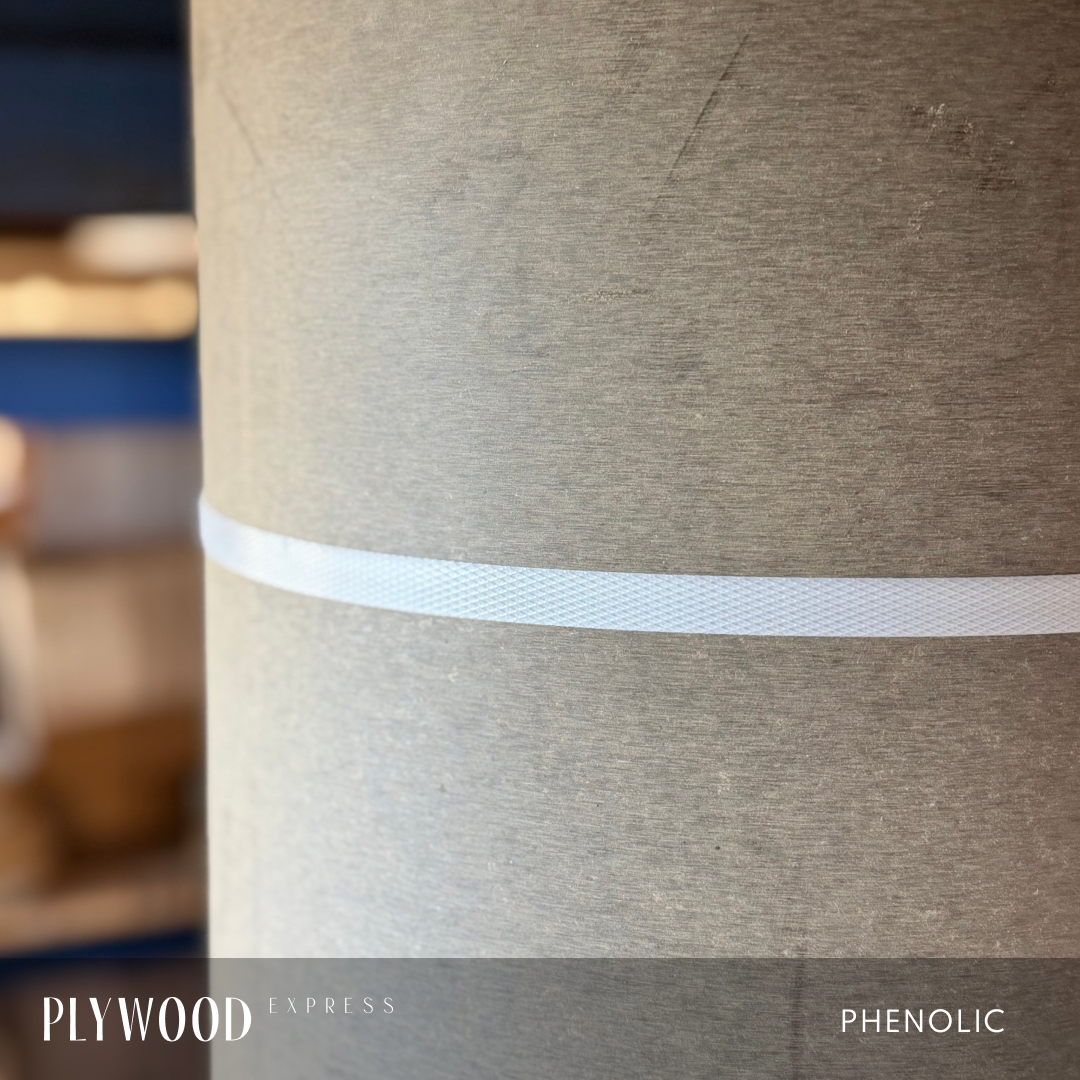
Phenolic-back veneer is generally specified for stability and strength, not for maximum flexibility. The grain-breaking process is commonly associated with flexible paper-back and some wood-back veneers, but phenolic-back veneer typically does not undergo grain breaking because the phenolic backing creates a more rigid and dimensionally stable panel.
Phenolic-Back Wood Veneer is manufactured by laminating a sheet of genuine wood veneer to a phenolic resin-impregnated backing under heat and pressure. This specialized construction creates a highly stable, durable, and moisture-resistant veneer sheet while preserving the natural beauty, grain pattern, and character of real wood. The phenolic backing reinforces the veneer and provides exceptional dimensional stability, making it ideal for demanding architectural and commercial applications where strength and performance are critical.
The phenolic backing is produced from kraft paper saturated with thermosetting phenolic resins and cured under controlled heat and pressure. This process creates a dense, rigid substrate that significantly improves the structural integrity of the veneer while helping minimize movement caused by changes in temperature and humidity. As a result, phenolic-back veneer offers superior resistance to telegraphing compared to raw veneer leaves and lighter backing systems.
Phenolic-back veneer is often specified for applications requiring maximum stability, and moisture resistance. Its reinforced construction provides excellent handling characteristics during fabrication, machining, and installation while maintaining a consistent, high-quality surface appearance across large panel areas. The added rigidity also makes it well suited for demanding manufacturing environments where dimensional consistency is essential.
Widely used in architectural millwork, commercial interiors, cabinetry, furniture, wall panel systems, doors, hospitality projects, retail environments, and transportation interiors, phenolic-back veneer combines the warmth and sophistication of natural wood with enhanced performance characteristics. It can be laminated to a variety of substrates and fabricated using standard woodworking equipment and techniques. Available in a wide range of domestic, exotic, and reconstituted wood species.