
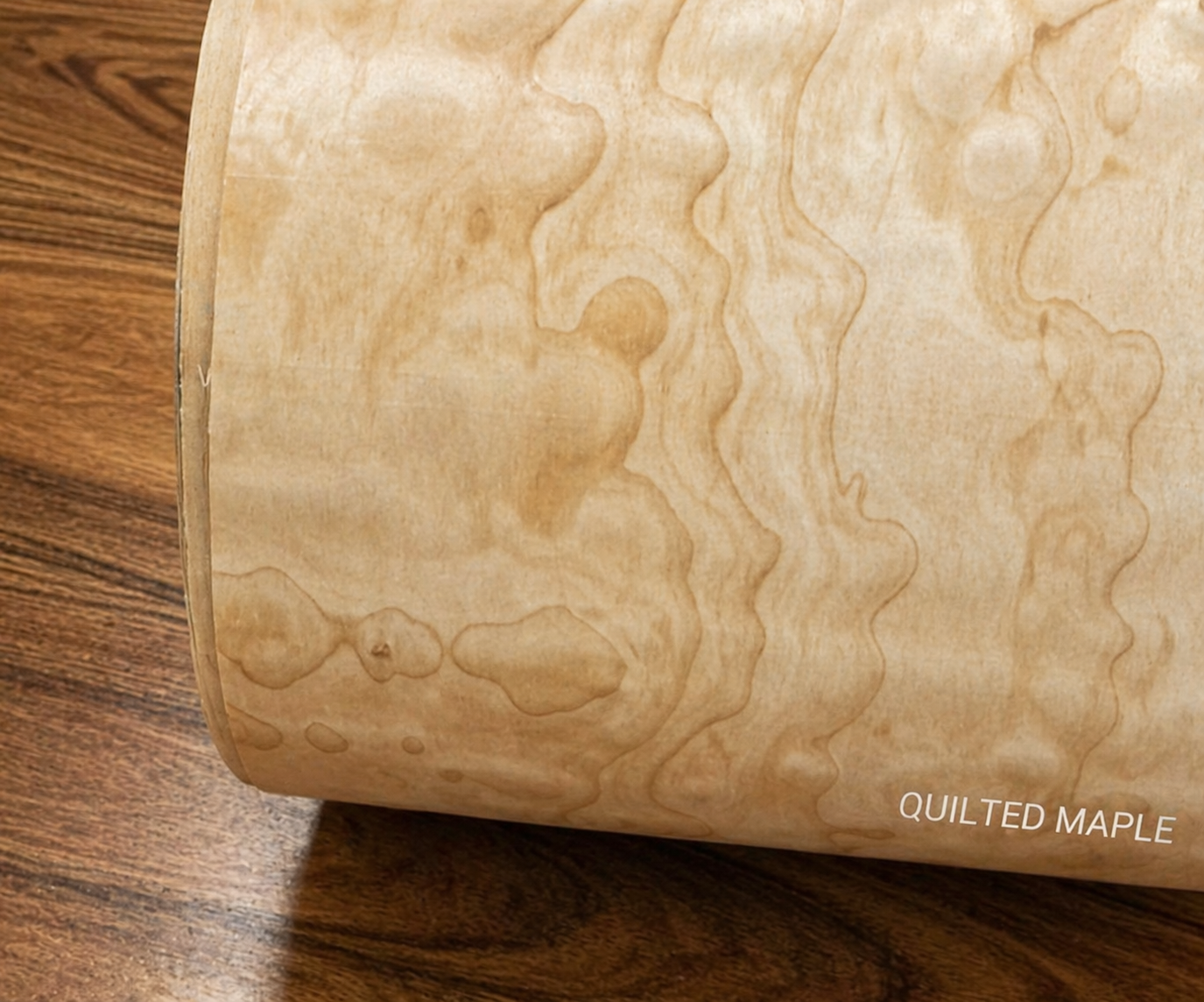
The unique wavy textures and visual patterns that appear across the surface of wood veneer are known as the “figure.” Wood figure adds movement, depth, and character to the veneer, creating the impression of a surface that is smooth yet visually textured and dynamic. These natural effects occur through irregularities and distortions in the tree’s growth rings, which create distinctive patterns as the wood develops over time.
While many people are familiar with basic wood grain, fewer realize that veneer is available in several different figure types and maple grain patterns, each offering a unique appearance. Understanding these differences is important when selecting veneer for architectural, furniture, yacht, aircraft, or millwork applications. Since veneer is a natural product, every sheet can vary, which can sometimes make the selection process challenging when ordering materials without seeing them in person.
Common Veneer Figure Types
- Bird’s Eye
Bird’s Eye figure is one of the most recognizable and sought-after veneer patterns. This figure is created by small distortions or depressions in the tree trunk that interrupt the normal growth pattern of the wood. As the tree continues to grow, these irregularities form small “eye-shaped” markings throughout the veneer.
Bird’s Eye figure is found most commonly in Maple species, particularly Northern Maple, and is highly valued for decorative and luxury interior applications.
- Curly
Curly figure features a flowing, wave-like appearance created by irregular grain growth within the wood. As light reflects across the surface, the grain produces a shimmering or rippling visual effect that changes depending on the viewing angle. Curly figure is especially common in Maple and is frequently used in high-end cabinetry, musical instruments, architectural panels, and custom furniture projects.
- Fiddleback
Fiddleback figure refers to a tighter and more uniform variation of curly grain, producing closely spaced stripes that run across the veneer surface. The name originated from its historical use in violins and other stringed instruments.
Common species that produce Fiddleback figure include Anegre, Mahogany, and Maple. Its elegant appearance makes it a popular choice for luxury interiors and decorative woodworking applications.
- Quilted
Quilted figure creates a soft, billowy appearance that resembles a padded or three-dimensional quilted surface. This figure is considered a larger and fuller variation of blister or pommele figure, producing a dramatic visual depth and movement across the veneer. Quilted figure is commonly found in Maple, Sapele, Mahogany, and Moabi. Because of its striking appearance, it is often selected for premium furniture, yacht interiors, private aircraft, and luxury architectural millwork.
Natural Beauty in Every Sheet
One of the reasons veneer remains so popular in luxury woodworking and interior design is the uniqueness of each natural figure pattern. No two sheets are exactly alike, allowing designers and craftsmen to create truly custom and visually distinctive spaces.
Whether you prefer the subtle elegance of Curly Maple or the dramatic depth of Quilted veneer, understanding veneer figure types can help you select the ideal material for your next project.