
Understanding Plywood: Composition, Benefits, and Modern Applications
Plywood is one of the most important and widely used materials in modern woodworking, architecture, and interior design. Found in everything from luxury cabinetry and architectural millwork to furniture, wall paneling, and commercial interiors, plywood has become the preferred choice for professionals who require strength, stability, consistency, design flexibility, and cost-efficiency.
While solid hardwood continues to have its place in woodworking, plywood offers significant structural and practical advantages that make it ideal for many residential and commercial applications.
What Is Plywood?
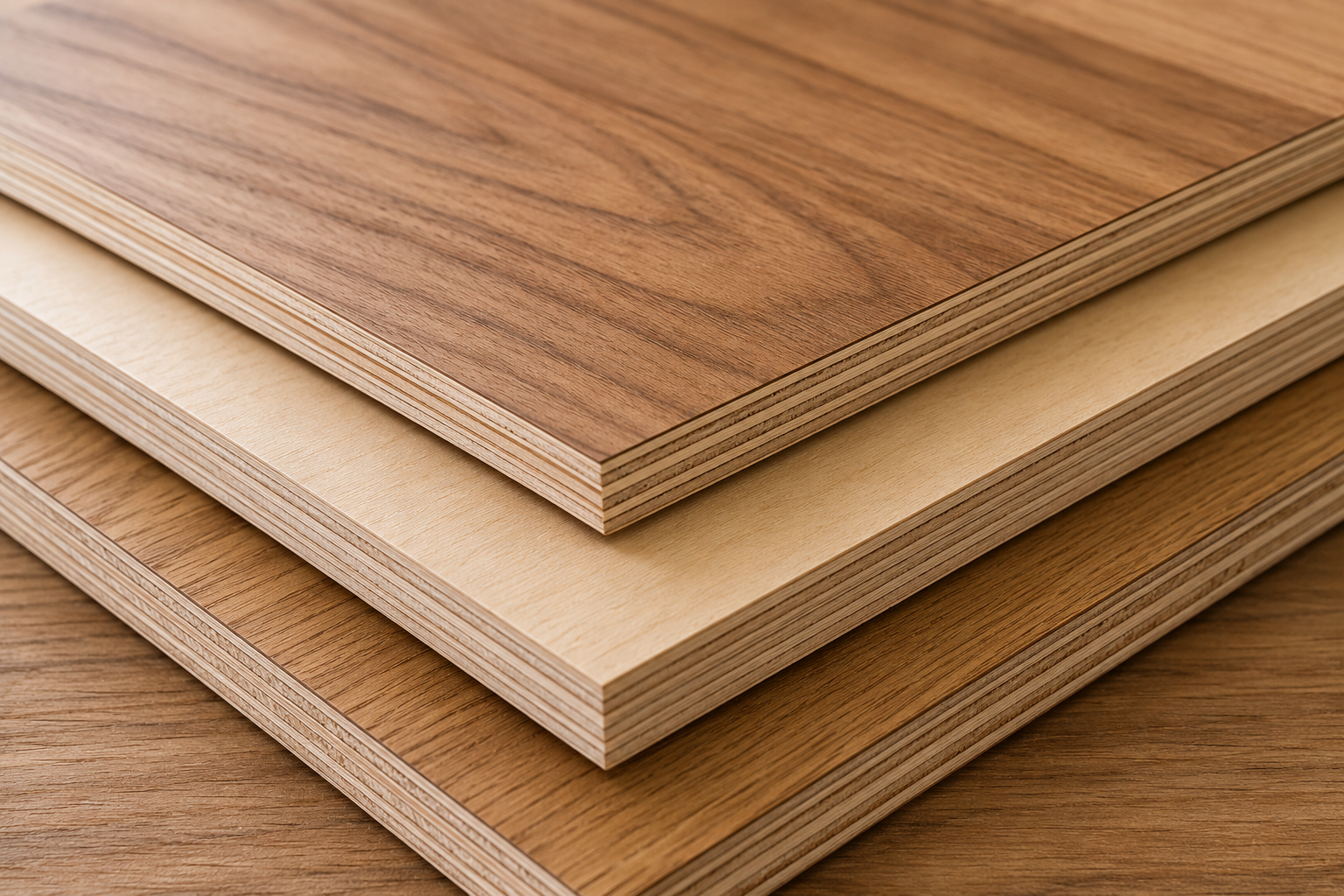
Plywood is an engineered wood panel manufactured by bonding multiple thin layers of wood veneer together under heat and pressure. These layers, known as plies, are assembled with alternating grain directions in a process called cross-lamination.
This construction method is what gives plywood its exceptional dimensional stability and structural strength. By alternating the grain direction of each veneer layer, plywood is engineered to resist the natural expansion and contraction that commonly affects solid wood.
The manufacturing process begins with carefully selected logs that are sliced into thin veneer sheets using precision equipment. Because these veneer sheets are extremely thin, plywood production maximizes the usable yield from each log while minimizing waste compared to traditional lumber manufacturing.
Depending on the species and application, plywood can feature a wide variety of face veneers, grain patterns, core constructions, and performance characteristics, making it one of the most adaptable building materials available today.
Why Plywood Is Preferred Over Solid Wood
One of the biggest advantages of plywood is its stability. Solid hardwood naturally reacts to changes in humidity and temperature, which can lead to warping, twisting, cracking, or splitting over time. Plywood, however, is specifically engineered to minimize movement, making it far more reliable for cabinetry, millwork, furniture, and large panel applications.
This stability becomes especially important in modern interior design, where clean lines, flush surfaces, and consistent finishes are critical to achieving a refined final appearance.
Plywood also offers excellent strength-to-weight performance. Its layered construction creates a durable panel capable of handling demanding structural and decorative applications while remaining easier to machine and fabricate than many solid wood products.
Another major advantage is cost-efficiency. Because plywood maximizes the use of natural wood resources and requires less solid hardwood material, it is often a more economical solution than solid lumber while still providing the beauty and warmth of real wood veneers. This makes plywood an ideal choice for large-scale architectural, commercial, and residential projects where both performance and budget are important considerations.
Efficient and Sustainable Material Usage
Another major benefit of plywood is the efficient use of natural resources. Because multiple veneer sheets can be produced from a single log, plywood manufacturing maximizes material yield while reducing unnecessary waste.
Many plywood products are also available with FSC-certified options, helping support responsible forestry practices and sustainable sourcing initiatives within the woodworking and construction industries.
Design Flexibility and Versatility
Modern plywood is available in an enormous range of wood species, veneer cuts, textures, finishes, and core options. Whether the goal is a natural rustic aesthetic, a clean contemporary design, or a highly refined architectural appearance, plywood provides virtually unlimited design possibilities.
It can be used for cabinetry, custom furniture, shelving, architectural wall panels, acoustic applications, retail fixtures, hospitality interiors, commercial millwork, kitchens, closets, office environments, and countless other applications.
With advancements in veneer technology and manufacturing, today’s premium plywood panels offer exceptional consistency, cleaner finishes, and higher-quality face veneers than ever before.
Choosing the Right Plywood
Selecting the right plywood depends on the specific requirements of the project. Factors such as wood species, veneer grade, core construction, intended application, environmental conditions, and finishing requirements all play an important role in determining the best panel for the job.
Higher-quality plywood panels typically provide better machining performance, improved screw holding, greater dimensional stability, and a more consistent finish, helping ensure superior long-term results.
Premium Plywood Solutions for Modern Projects
At Plywood Express, we offer a wide range of premium plywood panels and architectural wood solutions for residential, commercial, and custom millwork applications.
From decorative veneer plywood and FSC-certified panels to custom fabrication and specialty finishes, our team is committed to helping architects, designers, contractors, and woodworkers find the right materials for every project.
Contact us to learn more about our available plywood options, wood species, and custom panel solutions.